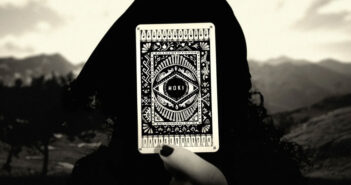
When Dave Davignon of MekMek Games originally reached out to me about his and Armine Tahmassian’s new card game, I was more interested in the mystical side of what the game is going for.
Dave originally found a blog post I wrote about Madame Blavatsky using solitaire as a vehicle for waking up some of her alleged supernatural powers. It’s no wonder then that I cared more about the magic and less about the game of what he and Armine were going for when creating the game. After all, Hoki refers to itself as a “fortune-telling legacy solitaire game.”
I asked Dave about this more after writing my initial review of the game. He sent me back a detailed response, and with his permission, I am publishing it here in its entirety:
I’m an editor and director for commercial film in the toy industry. Armine is an optometrist and an artist on the side. We wanted to do a big project together and set out to make a game. We are gamers and artists and we thought it would be a lot of fun and something we could see through.
We explored ideas for two years until we landed on Hoki. Lots of testing and writing. We got married in the process and had to take a break, so the discovery and development took almost three years. Originally it was a modified game of Accordion, a form of non-builder solitaire that we love.
So the idea for the gameplay loop came first. We found ourselves playing for hours just for fun, so we knew we had something. But there was a lot of room for imagining.
Armine is Armenian. Her mom is from Yerevan and her dad grew up in Iran. Her family really enjoys reading coffee-cup grounds, a process that looks at imagery in the grounds that stick to the sides of a cup after you turn it over.
We also love reading Hafiz. He was a Persian poet who wrote in ways that could be interpreted as a fortune. [Though he died in 1390], he was a progressive writer for the time and spoke frankly and beautifully about emotion. It’s really beautiful and our dad can speak and read Farsi, so we really loved the tradition of reading poetry after dinner. He would always read the passage in Farsi and then change/interpret the fortune to suit whatever advice he wanted to give his family. “You need to take things one step at a time,” kind of thing, haha!
Finally, Armine’s relatives would play Klondike Solitaire superstitiously. That was what sealed the deal. We wanted to embrace her culture aesthetically, and this all pointed to the same thing: a fortune-telling “themed” game. We found it unique and mysterious and we wrote and wrote and wrote about it.
The fortunes themselves began as an idea that came from the symbols on the cards. There is a diagram in the back of the fortune book that breaks down our logic. There are two groups of symbols—one regards time and the other regards things based on the human experience. We thought that would encompass “everything.” Time is broken down into things like the parts of a day, seasons in a year, and the portions of one’s life. The other group includes things that people do (generally vague) and they are in pairs (sometimes opposites and sometimes paired colloquially): Song and Dance, Treasure and Trade, Seed and Harvest, Rain and Drought… all things that we might do or experience.
The fortunes themselves—we wrote this book and this poetry as the final step of the project. We took the card titles and expanded each one into a story that included three “things.” This is because the position of the card at the end of each game points to the page. And THIS was because we needed more than 24 fortunes or else it would have felt predictable and less of a “message from the void,” so to speak. This method was invented by Armine, and it was really the end of development for mechanics.
So, each card has three elements in it that are associated with the card’s specific title; sometimes the elements are obvious and other times it requires a little interpretation. A lot of inspiration was drawn from a whole bunch of dream interpretations for these things. I write poetry, so we explored different poetic styles in the book. Some with meter and rhyme and some with abstraction—but it was interesting to associate the titles and images that we landed on along with the poem or the fortune in many cases. Sometimes they were things that were loosely related but ended up feeling like a really unique experience.
I tried to be entertaining and reach many different people. I’m not very superstitious, but I am very cosmic. I definitely wanted to include as much of the human experience as I could. This includes a little bit of the current affairs of the world. We needed that, but we only wanted to include it subtly.
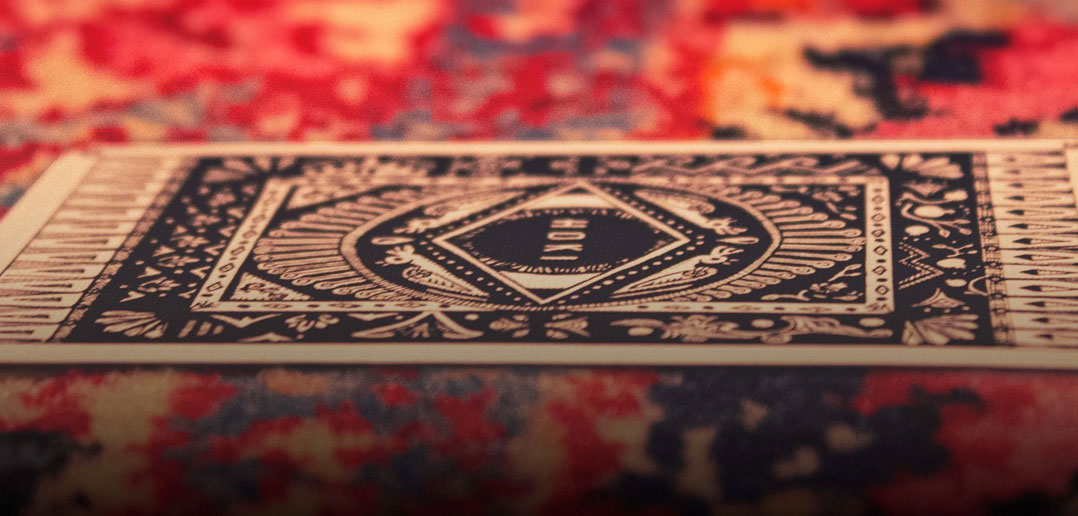
As for the images: they were dreamt up with the three-element structure in mind, the one I mentioned before. Sometimes the image was first, and sometimes the three elements were first. Armine drew these images by hand and in ink over the course of about two years and hundreds of hours.
Overall, the project is still evolving and we are still testing other ideas. Gameplay is first for us. We have a very high standard and, generally speaking, this part was very hard. We have been beaten to publish in one instance, and we also have careers and just enjoy making art and experiences, so we will eventually come up with something really great,
Hoki: a Fortune-Telling Legacy Solitaire Game is on sale now.