Solitaire meets Tarot?
Perfect—that’s exactly the kind of game I can get behind and try out. And that’s exactly what Dave Davignon and Armine Tahmassian of MekMek Games have created in Hoki, a “fortune-telling legacy solitaire game.”
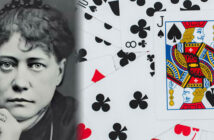
Full disclosure: Dave from MekMek Games reached out to me about sending over a review copy of the Hoki card game. It all came about when we had a chance encounter on the Solitaire subreddit. There I mentioned my interest in the nineteenth-century occultist Madame Blavatsky and her use of solitaire as a vehicle for some of her supernatural workings.
You could say that’s what Hoki is aiming for. Because by playing a game of Hoki, you’re interpreting symbols and colors, manipulating cards, and clearing rounds until you’re left with a final conclusion that provides you with a divination.
To start off, Hoki is a modern twist on traditional solitaire, played in fast five-minute rounds where the goal is to “clear” an arrangement of 24 cards. The game’s style gives players a puzzle that’s easy to pick up, but also has a point and a conclusion each time you play beyond winning or losing.
Players progress through a three-act structure that gradually transforms their hand-drawn deck: Act One teaches strategy, while Acts Two and Three demand clears while bumping up the complexity. Completing a game unlocks a sealed fortune-telling book with 72 poetic outcomes; the divination you end up with is influenced by the player’s unique path during a given game. This is where Hoki shifts beyond being just a game and more into a meditative pastime.
One thing to be aware of when playing Hoki is timing. While the deals and shuffles move rather fast, especially if you’re an avid player of solitaire (like me), you need to play through many of these games as you move toward your ultimate conclusion. You’re not going to easily burn through a session of Hoki; you’ll be consulting manuals and second-guessing your interpretation of the rules until you get the hang of it. But that’s the situation with any new game.
I chatted with Dave a bit over email, and he said that Hoki is entirely self-published and was originally funded on Kickstarter. He and Armine Tahmassian set out to create a solitaire game that was atypical—something fast, addictive, and layered with strategy.
Engagement is key in any game, so Dave and Armine wove a mysterious story into the game itself, replacing dense rulebooks with narrative clues and “gateways” that gradually teach deeper mechanics. The resulting game tests attention, rewards persistence, and delivers short rounds laced with deeper strategy in order to reach your final divination.
Development took three years, with an overlapping two-year Kickstarter campaign. The mystical theme (my favorite part) grew naturally out of family traditions.
“Armine is Armenian, and we have a tradition of reading fortunes from coffee cups in our family. The game came first, but those themes were a natural secondary development because of the history of solitaire and our family traditions,” Dave wrote to me.
The game certainly did come first, as the amount of work and dedication the duo placed into it is evident—and it’s what makes it worthwhile to play and engage with. Many of the cards give a Tarot vibe, which is very welcome as far as I’m concerned. I’ve been fascinated by the Tarot since age 11, and still am today.
But the tactile manipulation of the cards—that is the real pleasure of playing Hoki.
You need to unpack your decks, deal your stacks, and manipulate the cards until you’re able to proceed forward. Playing Hoki forced me to reflect on just how much I interact with digital content and how little I touch physical products anymore. That’s a shame. It’s no wonder there’s been a resurgent yearning for physical media like books, movies, and tabletop games.
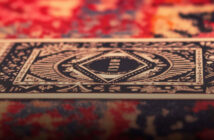
Hoki doesn’t cheap out here, either. The game’s material quality is top-notch. The cards are rich and vivid. All of the decks are stored in pouches flourished with labels. The guide books are compact and sturdy. The game is packaged in a hearty, magnetically sealed box for easy storage.
Details and care like this make Hoki well worth your time and attention.